
Medical and optical products are among the areas of B2B sales that require the most care. When a consumable's lot number, a lens's expiry date, or an eyeglass lens's axis value is entered incorrectly, the result may be not just a return but a problem that affects patient safety. In this article, we look at the special needs in the ordering processes of companies that distribute medical products and optical supplies, and the features to look for in B2B software.
Why Is Traceability Critical in Medical and Optical?
With an ordinary product, the question "which batch did we ship?" is rarely asked. With a medical product, it may be asked every day. If a manufacturer recalls a specific batch, you need to quickly find which pharmacy, clinic, or dealer that batch went to.
What makes this possible is recording every shipment with its lot (batch) number. Lot information should appear not only in the warehouse but also on the order and shipping documents. Otherwise, at the moment of a recall, hours are spent digging through Excel files and dispatch note archives.
Lot and Expiry Date Tracking
Sterile consumables, contact lenses, lens solutions, and many medical products carry an expiry date. The warehouse holds batches of the same product with different expiry dates. If this isn't managed correctly, the new batch ships first while the old batch expires on the shelf.
- FEFO logic: Prioritizing the batch with the nearest expiry date using a "first expired, first out" rule instead of "first in, first out."
- Near-expiry stock alert: Seeing in advance which products have less than a certain shelf life remaining.
- Customer-specific rule: Some institutions don't accept products below a certain remaining shelf life.
- Lot-based shipment record: A permanent record of which lot went to which customer.
In Multistok B2B, lot and serial number tracking is done within multi-warehouse stock management, and reorder alerts can be defined. How expiry-based prioritization and alert rules will work is clarified during implementation according to the company's warehouse and ERP structure. If you work with multiple warehouses, our article on multi-warehouse management and integration may also be useful.
Lot Information on Shipping Documents and Invoices
Hospital and clinic customers often want to see the lot number and expiry date of the products they receive on the dispatch note or invoice. This information is used when they log goods into their own warehouses and during internal audits. If lot information is written onto documents by hand, errors are inevitable.
When the order, stock, and document flows are in the same system, lot information can be carried automatically from the shipment to the document. Multistok B2B's support for e-Invoice, e-Archive invoice, and e-Dispatch note, compliant with the Turkish Revenue Administration (GİB), combines the document process with the order flow. Which fields appear on the document is determined during implementation based on your ERP structure.

ÜTS and Regulatory Obligations
In Turkey, medical devices are tracked through the Product Tracking System (ÜTS) operated by the Turkish Medicines and Medical Devices Agency (TİTCK). In general, manufacturers and importers must register their products in the system, and for some product groups, sales and transfer movements must be reported. Optical products such as eyeglass lenses and contact lenses may also be classified as medical devices.
Which of your products are subject to which registration and reporting obligations depends on the product class, your company's role in the supply chain, and current regulations. For this reason, we recommend confirming this with your regulatory consultant and your financial advisor.
From a software perspective, what matters is that the information to be reported to ÜTS (product number, lot or serial number, recipient information) is collected completely and accurately during the sales process. When order, lot, and shipment information is kept in a single system, the reporting process runs with far fewer errors. You can explore Multistok B2B's use cases for the medical and optical industry on our medical and optical sector page.
Power, Diameter, and Axis Variants in Optical
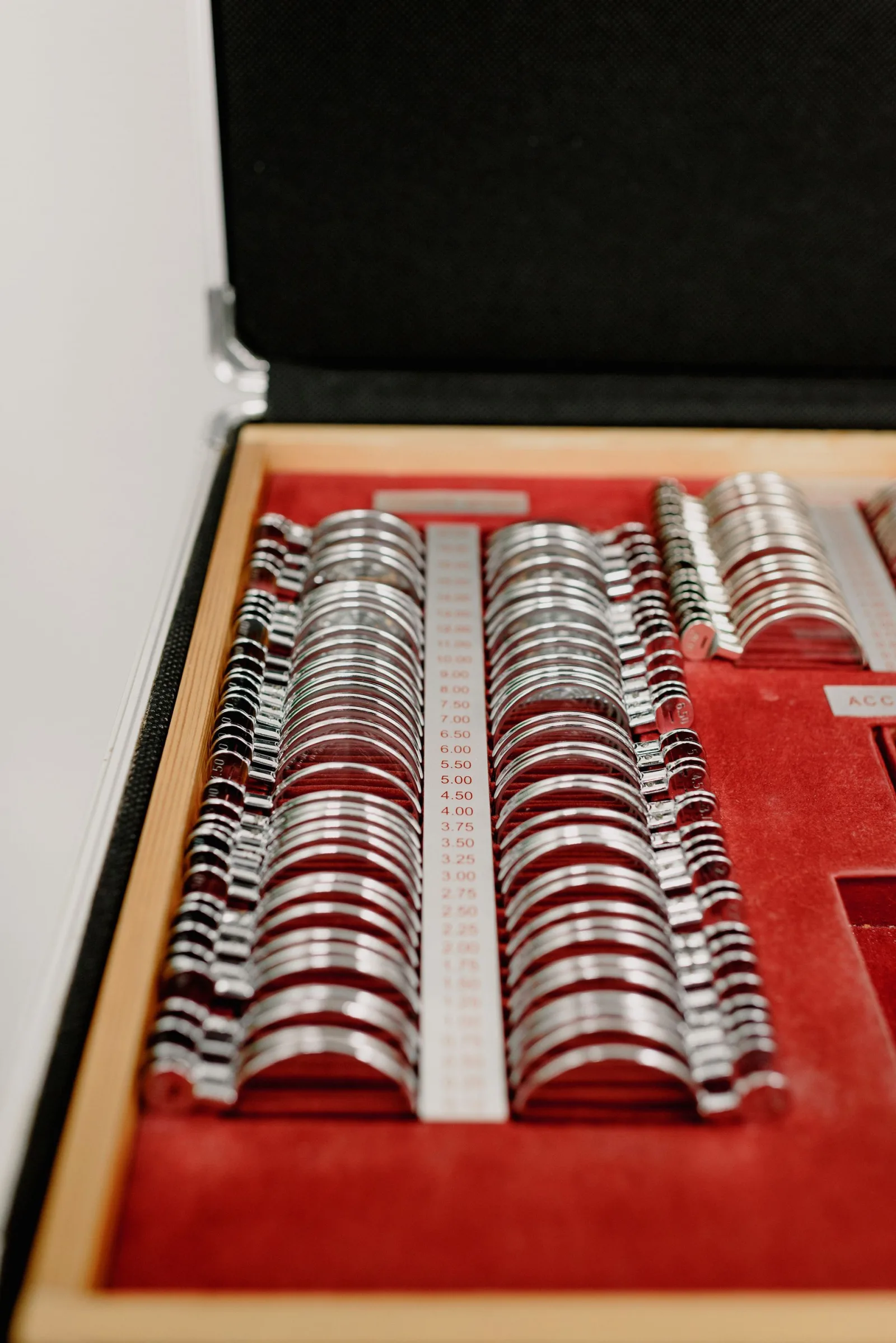
In the optical industry, the product structure is even more complex than medical consumables. A single eyeglass lens model splits into thousands of combinations based on sphere, cylinder, axis, diameter, refractive index, and coating type. For contact lenses, base curve, diameter, and power are the deciding factors.
| Product | Values that define the variant | What to watch for |
|---|---|---|
| Eyeglass lens | Sphere (SPH), cylinder (CYL), axis (AX), diameter, index, coating | Distinguishing stock lenses from lenses made to prescription |
| Contact lens | Power, base curve (BC), diameter (DIA), wear schedule | Expiry date and lot tracking |
| Lens solution | Volume, ingredients | Expiry date tracking |
| Eyeglass frame | Model, color, frame size | Brand- and model-based catalog |
An optical store orders based on its customer's prescription. Being able to select variants by these values in the portal reduces the risk of shipping a product with the wrong power. Common values kept in stock can be opened directly for ordering, while a quote or custom order flow can be used for lenses made to a specific prescription.
Optical stores typically place many small orders throughout the day and expect fast delivery. Sending the tracking code via SMS or WhatsApp the moment an order is handed to the carrier reduces "where is my order?" questions. Multistok B2B's shipping integration automatically creates shipments, prints labels, and sends tracking code notifications.
Pharmacies, Optical Stores, and Clinics: Different Customers, Different Rules
A medical and optical distributor's customer base is diverse. Pharmacies, optical stores, private clinics, hospitals, dentists, and sub-dealers can all use the same portal, but the products, prices, and payment conditions each one sees are different.
- Pharmacies: Frequent, small orders, short payment terms, a wide product range.
- Optical stores: Prescription-based variant orders, frames and lenses together.
- Clinics and hospitals: Corporate orders requiring purchasing approval, document requests.
- Sub-dealers: Dealer pricing, target and commission tracking.
In Multistok B2B, separate price lists, discounts, credit limits, and payment terms can be defined for each customer group. With role-based user permissions, each customer type can be made to see only the products appropriate for it. For corporate customers, a multi-level approval flow helps ensure that an order doesn't proceed without approval from an authorized person on the customer side.
When health data and customer information are involved, data security takes on added importance. You can find the general framework on this topic in our article on KVKK and data security.
Conclusion
For medical and optical companies, B2B software is a traceability tool that goes beyond taking orders. When lot and expiry date tracking, regulation-compliant records, accurate management of sensitive variants such as power, diameter, and axis, and rules specific to different customer types come together in a single system, both operational errors and audit risk decrease. To see how it can be adapted to your own product and customer structure, request a free demo.
Frequently Asked Questions
Does B2B Software Handle ÜTS Reporting Automatically?
ÜTS reporting obligations vary depending on the product group and the company's role. What matters is that the product, lot, and recipient information required for reporting is collected completely during the sales process. We recommend clarifying how the reporting process will be set up together with your regulatory consultant during implementation.
How Are Batches of the Same Product With Different Expiry Dates Managed?
Each batch is kept in stock with a separate lot number. Shipping the batch with the nearest expiry date first prevents products from expiring on the shelf.
Is It Possible to Show Thousands of Optical Lens Variants in the Portal?
Yes. Variants are defined by values such as sphere, cylinder, axis, and diameter, and customers reach the right product by selecting these values. A separate order flow can be set up for lenses made to prescription.
Can I Apply Different Prices to Pharmacies and Clinics?
Yes. You can define price lists, discounts, and payment terms specific to a customer group or to individual customers. Each customer sees only their own terms when they log in to the portal.