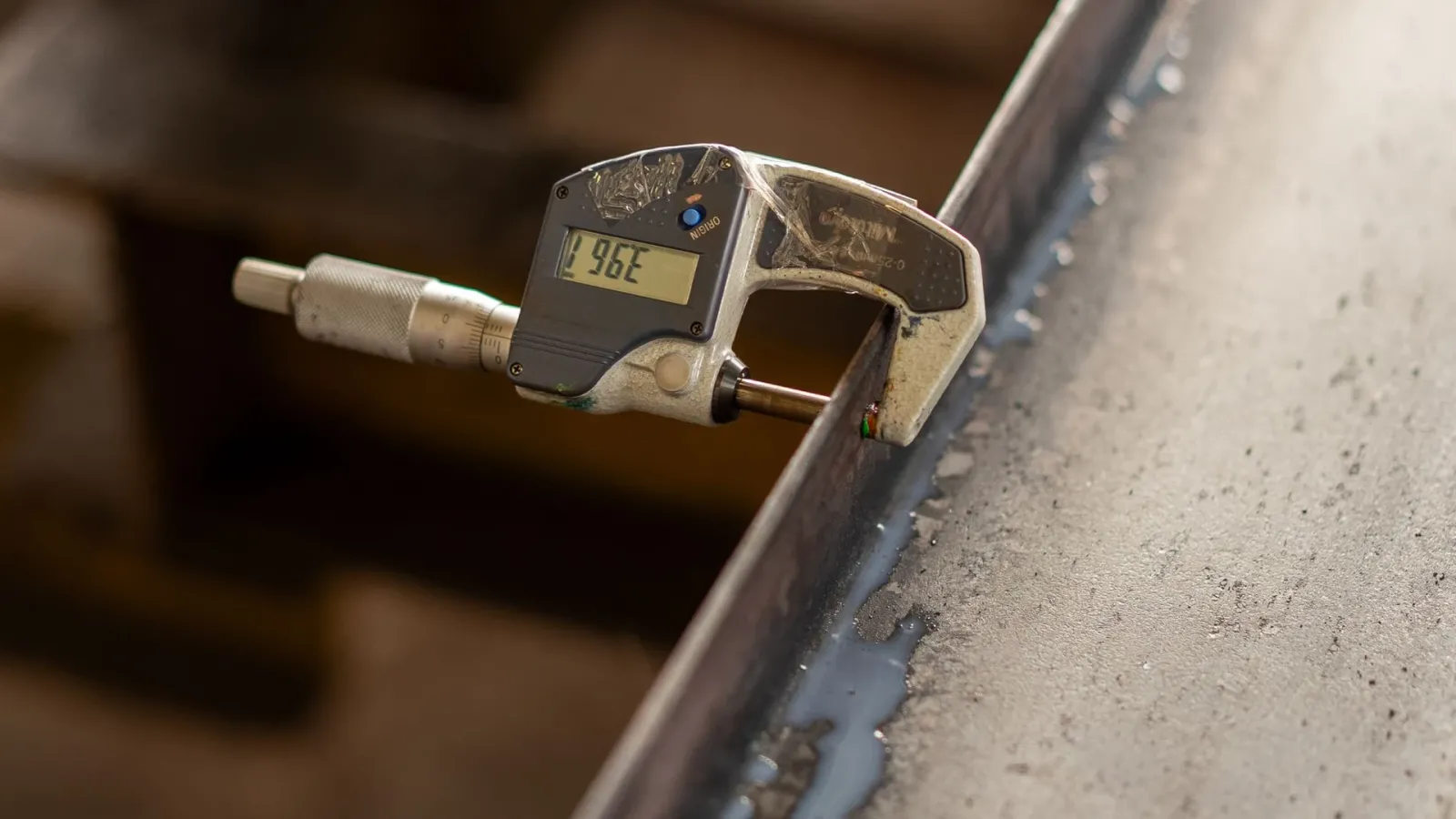
Calipers, micrometers, dial indicators, gauges, surface roughness testers, coordinate measuring machines... Customers of a company that sells precision measuring instruments evaluate a product on its technical specifications before its price. In the buying decision, the calibration certificate, measurement uncertainty, and serial number matter far more than color or packaging. In this article, we look at the B2B sales process of precision measuring instrument companies and the features software needs to support it.
Technical Data Drives Sales of Measuring Instruments
A quality control engineer buying calipers won't settle for "150 mm digital caliper." They want to know the measuring range, resolution, accuracy, protection rating, and whether it has a data output. If this information isn't on the product page, they pick up the phone, send an email, or check a competitor's catalog.
That's why the product card for measuring instruments in a B2B portal needs to be much richer than a typical e-commerce page. The table below summarizes the most frequently asked-about technical fields:
| Technical Field | Example | What It Means for the Buyer |
|---|---|---|
| Measuring range | 0-150 mm, 25-50 mm | Suitability for the part being measured |
| Resolution | 0.01 mm / 0.001 mm | The smallest readable value |
| Accuracy / error limit | ±0.02 mm | How reliable the measurement is |
| Protection rating | IP65, IP67 | Use in dusty and oily environments |
| Data output | USB, wireless | Transferring measurement results to a computer |
Filtering should work on these fields, too. When a customer searches for "a micrometer with 0.001 mm resolution and IP65," having the results narrow down accordingly greatly reduces the simple questions your sales team receives. We also covered this topic in our article on why product information drives B2B sales.
Calibration Certificates and Document Management
A factory that operates under a quality management system has to document that the measuring instruments it uses are calibrated. That's why the calibration certificate shipped with the device is an inseparable part of the product. During an audit, a device whose certificate can't be found calls its measurement results into question as well.
A calibration certificate is usually specific to the device's serial number. In other words, two calipers of the same model have different certificates. Calibrations performed in accredited laboratories (under ISO/IEC 17025) provide traceability to national and international standards, and corporate buyers specifically ask about this.
- Product-level documents: Technical data sheets, user manuals, and declarations of conformity are attached per model.
- Device-level documents: Calibration certificates are kept per serial number.
- Easy access: Customers should be able to reach the PDF of the relevant certificate from their past orders.
We explained the sales impact of attaching PDFs to product pages in our article on why adding PDFs to product details matters. How serial number-specific certificates are matched to orders should be planned during implementation, based on the company's calibration process.
Serial Numbers and Traceability
With precision measuring devices, each unit carries its own serial number. That number ties together the calibration certificate, the warranty period, and the next calibration date. When a customer asks years later, "When did we buy this device from you?", you should be able to answer in seconds.
In Multistok B2B, lot and serial number tracking is handled on the stock side; during shipping, it's recorded which serial-numbered device went to which customer. This record also lays the groundwork for after-sales services such as periodic calibration reminders.
Periodic Calibration: A Recurring Sales Opportunity
Measuring instruments need to be recalibrated at regular intervals. The interval varies depending on the type of device, how often it's used, and the customer's quality procedure. Customers often track this date themselves and remember it at the last minute.
For the seller, this is a regularly recurring service and renewal opportunity. If you know which serial-numbered device each customer has, you can notify customers ahead of time when calibration is coming due. How these reminders are set up should be determined by whether the company offers calibration services and how its processes work.
Currency and Lead Times for Imported Products
A significant share of precision measuring instruments is imported. Prices are mostly in foreign currency, and lead times for a model that's out of stock can run to weeks. When quoting a customer, both the current exchange rate and the delivery time should be stated clearly. Multistok B2B's support for TRY, USD, and EUR makes it easier to work with foreign-currency price lists.
Quote-Based Sales and Corporate Buyers
Alongside catalog products, items sold on a quote basis also play a big role in measuring instruments. There's no fixed price for a measuring system with custom fixtures, a quality lab setup made up of multiple devices, or packages sold together with calibration services.
In these sales, the process usually works like this: the customer shares their need, the sales team prepares a quote, the quote is revised, approved, and turned into an order. In Multistok B2B, quotes are prepared as PDFs, their versions are tracked, and they can be sent via email or WhatsApp. That way, there's no confusion over "Which quote did we approve?"

The Corporate Buyer's Approval Workflow
At corporate customers such as factories, defense industry suppliers, and testing laboratories, the person placing the order and the person approving it are often different. The quality engineer defines the need, the purchasing department evaluates the price, and the budget owner gives the approval.
In a B2B portal, this structure can be handled with role-based user permissions. Multiple users are set up for the same customer company, and you define who creates the cart and who approves it. Multistok B2B's multi-level approval workflow can be configured so that orders above a certain amount aren't processed until they've been approved.
Corporate customers usually buy on payment terms and stick closely to their payment schedule. Letting the customer see their account balance, upcoming invoice due dates, and available limit in the portal makes planning easier for the purchasing department and shortens collection conversations.
Selling Measuring Instruments With Multistok B2B
Multistok B2B brings catalog sales, quote-based sales, and corporate customer management together in a single portal. You can explore use cases for machinery and industrial products on our machinery and industrial sector page.
- Customer-specific price lists, discounts, and credit limits
- PDF quotes, version tracking, and sending via WhatsApp/email
- Lot and serial number tracking, multi-warehouse stock management
- Role-based user permissions and multi-level approval workflows
- Two-way integration with ERPs such as Logo, Mikro, Netsis, and SAP S/4HANA
- Multiple languages and currencies for exporting companies
Conclusion
In selling precision measuring instruments, trust comes from technical data and documentation. A portal with complete specifications on the product card, calibration certificates tied to serial numbers, a traceable quoting process, and support for the corporate buyer's approval workflow both lightens your sales team's load and strengthens your customer's hand during audits. To see how it works with your own product range, request a free demo.
Frequently Asked Questions
Is a Separate Calibration Certificate Issued for Each Device?
Yes, a calibration certificate is usually specific to the device's serial number. That's why it's important to match the certificate correctly with the device being shipped.
How Are Quote-Based Products Displayed in the Portal?
These products can be listed with a quote request option instead of a price. The sales team prepares a PDF quote based on the request, tracks revisions as versions, and the approved quote is turned into an order.
Can More Than One Person at a Customer Company Use the Portal?
Yes. With role-based permissions, multiple users can be set up for the same company, and the rights to create and approve orders can be assigned to different people.
Can Measuring Devices Be Filtered by Technical Specifications?
Using fields such as measuring range, resolution, and protection rating as filters depends on keeping your product data consistently organized by these fields. Which fields become filters is determined during setup based on your product structure.